

Unknown Jellyfish
Often in cases of jellyfish sting, the animal responsible is not seen, partly because it is mostly transparent. Diagnosis of an unknown species may therefore be based on the presenting signs and symptoms and the appearance of the lesions.
| Species | Signs and Symptoms | |
| Box Jellyfish |
|  |
| Irukandji | Often the pain associated with the sting is mild and may initially go unnoticed. Similarly, the appearance of the stung area may be indistinguishable from healthy skin. Signs and symptoms appear 30 to 45 minutes after the envenomation.
| |
| Bluebottle |
More serious clinical effects are seen in the larger, many-tentacled species:
| |
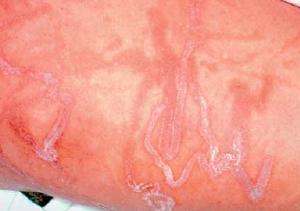
| Hair Jelly | This jellyfish is not considered as serious a threat as those above. The sting site lesions have the appearance of multiple thin zig-zag but parallel weals surrounded by pale erythema.
| |