

- First Aid
- About Venom
- Clinical
- For Kids
- Research
- Reference
Paralysis Tick (Ixodes holocyclus)
   | |
The Australian paralysis tick is found in bush areas along the eastern coast of the continent. It contains a toxin in its saliva that may cause progressive paralysis in humans by interference with presynaptic transmission in motor nerves. It may also cause severe allergy in some individuals. The female must feed on blood during each of the three stages of the reproductive cycle, and humans can become unintentional hosts. The tick usually feeds for a period of 4-5 days, during which time the accumulation of toxic saliva in the host may result in progressive motor paralysis. | 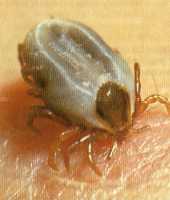 |
Deaths due to tick poisoning are rare, but at least twenty have been recorded in New South Wales this century. Tick paralysis may case significant losses of livestock and farm animals such as dogs. Another Australian tick, Ixodes cornuatus, may also cause paralysis.